Dreamspell · Law of Time · 13:20

Mayatime

Not a grain in the glass and not an arrow in flight: Dreamspell treats time as a pattern of synchronic cycles. The 260 kin, 13 Galactic Tones, 20 Solar Seals and 13 Moons form the navigation system proposed by José Argüelles.

Hymn of Time Renat · original song
0:00 / 0:00

The song is an artistic work. Its images are poetic; the reference sections below distinguish Dreamspell from historical Maya calendars.

260kin in a galactic spin
13Galactic Tones
20Solar Seals
01 · José Argüelles

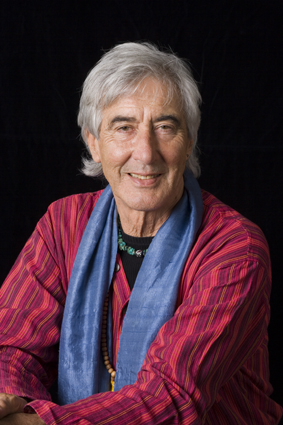
José Argüelles — founder of the Dreamspell movement

José Argüelles (1939–2011) was the key initiator and author behind Dreamspell and the founder of the Foundation for the Law of Time. The Foundation’s own chronology dates the creation of the Dreamspell codes to 1991; Dreamspell: Journey of Timeship Earth 2013 was published with Lloydine Argüelles as co-author.

Portrait provided for the Dreamspell founder section

Argüelles proposed viewing time not only as duration but as a field of synchronization. This is the source of the 13:20 language, the 260 kin, Galactic Tones, Solar Seals, Wavespells, Castles and the 13 Moon / 28-day calendar.

This site follows that modern current. The song image — “time is not a tyrant, time is a weaver” — is used here as a metaphor: Time Navigator reads recurring Dreamspell patterns, while historical Maya calendars are presented separately with their own sources.

1991creation of Dreamspell codes in the Foundation chronology
13:20the core symbolic timing ratio in the Law of Time system
13 × 28structure of the 13 Moon calendar
02 · Two different counts

Dreamspell is not the Long Count

They can appear side by side in one navigator, but they answer different questions. This distinction is essential to the meaning of the project.

Dreamspell

Dreamspell / Wizard’s Count

A modern system developed by José and Lloydine Argüelles for working with what they call the synchronic order: 260 kin, 13 Galactic Tones, 20 Solar Seals and the 13 Moon / 28-day calendar. In Argüelles’ own writings, Dreamspell has its own calibration and is not the same count as the historical Long Count.

Purpose: symbolic navigation, synchronicity and recurring 13:20 patterns.
Long Count

Maya Long Count

A historical Maya chronological system that records an accumulating number of days through k’in, uinal, tun, katun and baktun units. It is used to distinguish events across spans longer than the 52-year Calendar Round.

Purpose: chronology and distinguishing historical or mythic dates.

In his own materials, Argüelles explicitly described Dreamspell and the Long Count as different standards serving different purposes. Smithsonian describes the Long Count independently as an ancient Maya chronological system.

03 · 13:28 rhythm

13 Moons of 28 days

The 13 Moon calendar is a modern Dreamspell layer: thirteen equal Moons create the 13:28 rhythm and a separate map of the year around Kin, plasmas and the Day Out of Time.

13Moons in a year
28days in each Moon
364days in 13 Moons
Open the 13 Moon calendar
04 · Historical context

Maya calendars as a separate tradition

Dreamspell draws inspiration from 13 × 20 calendrical mathematics, but historical Maya calendars have their own traditions and purposes. They are shown separately here so the Argüelles system is not conflated with the Long Count, Haab or living Tzolk’in practice.

260days in the cycle

Tzolk’in

A sacred 260-day cycle: numbers from 1 to 13 combine with twenty day names. The full combination repeats after 260 days.

13 × 20numbers and day names
Ritualceremony and calendrical practice
Open section
05 · Calendar Round

Two wheels meet again

Tzolk’in and Haab run in parallel. The same ritual-and-solar date pair returns after 18,980 days.

06 · Deep time

A date that stays distinct within the cycle

The Long Count records elapsed days from a mythic starting point. Positional notation distinguishes events that share the same Calendar Round date.

Important: December 21, 2012 completed a 13-baktun cycle. It marked the end of a major calendrical period, not a prediction of the end of the world.
Long Count units
Unit
Composition
Duration
k’in
base unit
1 day
uinal
20 k’in
20 days
tun
18 uinal
360 days
katun
20 tun
7,200 days
baktun
20 katun
144,000 days
Myth and fact

Not the end of the world

December 21, 2012 completed the thirteenth baktun of a 13-baktun Long Count cycle. Maya sources do not support the idea of a catastrophic “end of the world.”

Calendrical traditions continue in contemporary Maya communities: this is living cultural practice, not a vanished mystery.